

Introduction
For companies in the business of small molecules, especially in chemicals, agrochemicals, and advanced materials, patents are typically constructed around a minor change to a core chemical scaffold. For these innovations, and to know where competitors may already have coverage, more than the usual keyword-driven search is necessary to protect these innovations and to understand where competitors already have coverage.
Chemical and Markush structure searches examine the molecular architecture of an invention, rather than simply the names and classifications of an invention, to look at scaffolds, substituents, ring systems, and structure–activity relationships. Chemical and Markush structure searches are the key to protecting these innovations and understanding where competitors already have coverage, and we combine this structure-based view with domain expertise and AI-enabled tools to help IP and R&D teams make confident decisions about patentability, freedom-to-operate (FTO), and portfolio strategy at TT Consultants.
Why Structure-Based Searching Matters
Chemical patents often contain many claims that are drafted around a central scaffold with multiple points of variation, and Markush claiming provides the means to describe a family of compounds using generic placeholders (R-groups, heteroatoms, ring substitutions, linkers and the like), so that a competitor’s molecule does not need to be identical, but may still fall within scope if it fits the Markush definition.
This presents a dual challenge: innovators need to make sure their own claims are drafted with sufficient breadth, and companies entering a space need to make sure that their candidate compounds, intermediate or synthetic routes are not unintentionally encroaching on someone else’s Markush umbrella. This makes structure-based searching a critical control step in any serious IP or product development program in chemistry-driven domains.
Limits of Conventional Patent Searching for Chemical Inventions
Traditional prior art searches are generally keyword, classifications (IPC/CPC), and assignee or inventor name searches. These layers are useful and remain a part of our methodology at TT Consultants, but they are not sufficient when it comes to chemistry-heavy inventions.
- Multiple names can be used for the same chemical entity (IUPAC, INN, common names, code names).
- Key structural concepts may be lost in generic functional language without specifically naming the compound.
- Novel intermediates and process variants may be disclosed as structures only, not as searchable names.
- Broad Markush claims may not be discovered through a limited set of keywords or classifications alone.
“Structure-based searching alone is not sufficient to find important blocking references or opportunities for differentiation, so TT Consultants approaches chemical and Markush searching as an exercise in chemistry, information science, and legal awareness.”
TT Consultants’ Methodology for Chemical & Markush Structure Searches
The process is practical, transparent and tailored to the stage of development and risk considerations for each client. The specific approach varies but generally follows the stages outlined below.
Understanding Context and Objectives
Our process starts with a scoping discussion and technical disclosure review to consider the core structure, related analogues, target product profile, indication or application, geography, and time horizon.
We also confirm the decision to be supported (e.g., patentability check for a new scaffold, FTO scan prior to scale-up, or deep prior art support for invalidation or opposition).
Designing Search Inputs
Our chemistry & pharmaceutical expert translates the disclosure into search-ready inputs: drawn structures, representative variants, and key intermediates, along with naming conventions, synonyms, and process terms.
We then design logical combinations of structure queries and text queries and identify relevant IPC/CPC classes to manage volume.
Executing Structure and Text-Based Patent Searches
We perform exact, sub-structure, similarity and Markush searches on agreed cores and intermediates using structure-capable databases and our own internal tools, and execute keyword-based strategies using chemical names, targets, indications, process descriptors and applicant details in parallel.
Often, citation analysis and assignee- or inventor-based searching are performed to discover other, non-obvious references. In this phase, our team continually calibrates the search by modifying structures, adjusting filters, and validating sample hits with the client as necessary.
Complementary Non-Patent Literature (NPL) Search
It is just one side of the picture; in many programs, especially those at earlier stages of discovery or lifecycle management, understanding the scientific context and emerging trends in the open literature are equally important, and we complement the results of patent searching with targeted queries in relevant scientific and technical sources, as well as capturing studies that describe similar scaffolds, mechanisms of action, or synthetic strategies.
Review, Interpretation and Reporting
Raw search hits are clustered and ranked by relevance, subject-matter experts review claim language, structural detail, and legal status to identify core-blocking references, close art and general background, and develop a narrative around the results – what is already protected, where there may be opportunity for differentiation, and what risks are identified. Outputs are delivered in Word or spreadsheet format, with filters and visual summaries to support internal discussion.
Typical Use-Cases We Support
TT Consultants’ chemical and Markush structure searches support decision-making across a variety of scenarios:
- Patentability of new scaffolds, analogues, salts, polymorphs or prodrugs.
- FTO for candidates for advanced development or commercialization.
- Identify prior art for oppositions, invalidation and litigation support.
- Room for design-around and second-generation products.
- Benchmarking competitive activity around key chemical series or targets.
Illustrative Examples of Our Work
Example 1 – Landscape Around A CNS Small Molecule
A client in the CNS space asked for a structured view of patents and literature around a small-molecule series and we built structure- and name-based strategies to capture both direct analogues and broader families defined through Markush language.
The results showed key assignees, breadth of claimed series, and gaps in substitution patterns explored, which the client used to focus their own series and prioritize follow-up chemistry.
Example 2 – Assessing Room Around A Heterocyclic Scaffold
Another client wanted to know if there was room in a heterocyclic scaffold with multiple functionalization positions to build a portfolio. We reduced the disclosure to representative structures, performed sub-structure and similarity searches across patent data, and linked hits to indications and targets.
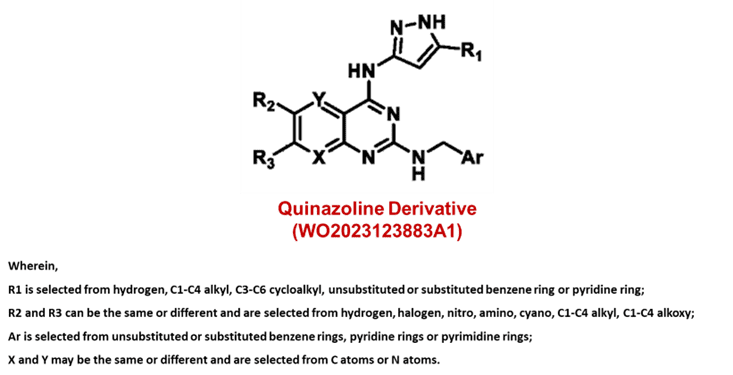
- The structure search was performed using substructure searches, either removing substituents or expanding the structural definition.
The analysis showed which substitution patterns had been highly explored and patented, and which combinations were still relatively open, aiding IP planning and medicinal chemistry strategy.
Example 3 – Process Route And Intermediate Review
A client seeking to manufacture a marketed small-molecule drug wanted to understand the IP position around process routes and intermediates. We conducted structure searches on intermediates and text-based searches on reagents, solvents and conditions.
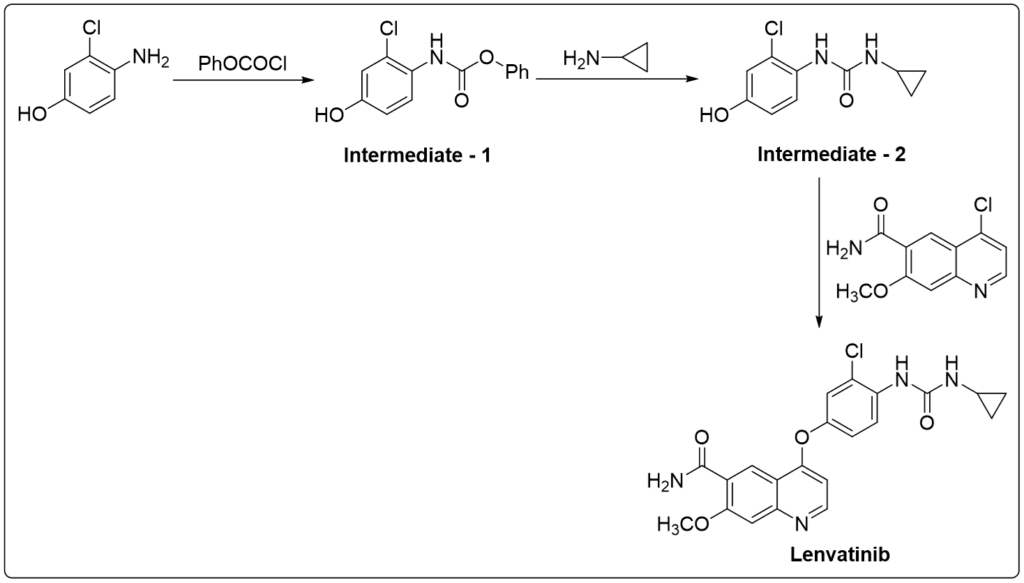
We then mapped the main routes described in patents and relevant publications, identified which steps and intermediates were core to third-party protection, and where there might be room to claim alternative approaches.
- Substructure searches were run for each step and for all intermediates.

Why Work With TT Consultants For Chemical Structure Searches?
Our clients appreciate that we treat chemical and Markush structure searches as a specialized service, not an extension of text searching, and that our tools and experience can reduce blind spots and support stronger, more defensible IP positions.
- Cross-functional team of chemists, patent professionals and search specialists.
- Pharmaceuticals, agrochemicals, specialty chemicals and materials science experience.
- Application of structure-capable tools, in combination with TT Consultants’ own technology platforms for enhanced coverage and efficiency.
- Transparency of our auditable methodology and ability to customize outputs to in-house IP and R&D workflows.
- Global client base and familiarity with multi-jurisdictional filing and enforcement considerations.
Connect With Our Team
Our team can design a search and analysis approach that is appropriate for your timelines and risk tolerance, whether you are developing a new program, planning filings, or reviewing the IP position of an existing asset.
Talk To Our Expert
Request a sample redacted report illustrating our approach to searching for chemical and Markush structures.