

Introduction
When people talk about Denmark as a clean energy leader, they usually mean the policy numbers: share of electricity from wind, carbon targets, green hydrogen ambition. Those are real. But for a company planning to launch a clean energy product into the Nordic market, the policy story is secondary. The patent story is what matters for product launch.
Denmark is not just a clean energy consumer and policy advocate — it’s a clean energy IP originator. Vestas and Ørsted together hold one of the densest concentrations of wind energy patents in the world. Denmark’s Power-to-X hydrogen programme has generated a wave of electrolyser and hydrogen conversion patent filings. And Nordic adoption of heat pump technology — among the highest in Europe — has produced a growing body of heat exchanger, refrigerant system, and integrated energy management patents.
For any company launching a wind, hydrogen, or heat pump product into the Nordic market, this isn’t a quiet regulatory backwater. It’s one of the most patent-dense clean energy markets in the world, and the FTO picture is specific to each technology category. This article is a practical guide to each.
Wind Energy: Why Denmark’s Patent Landscape Is Uniquely Dense
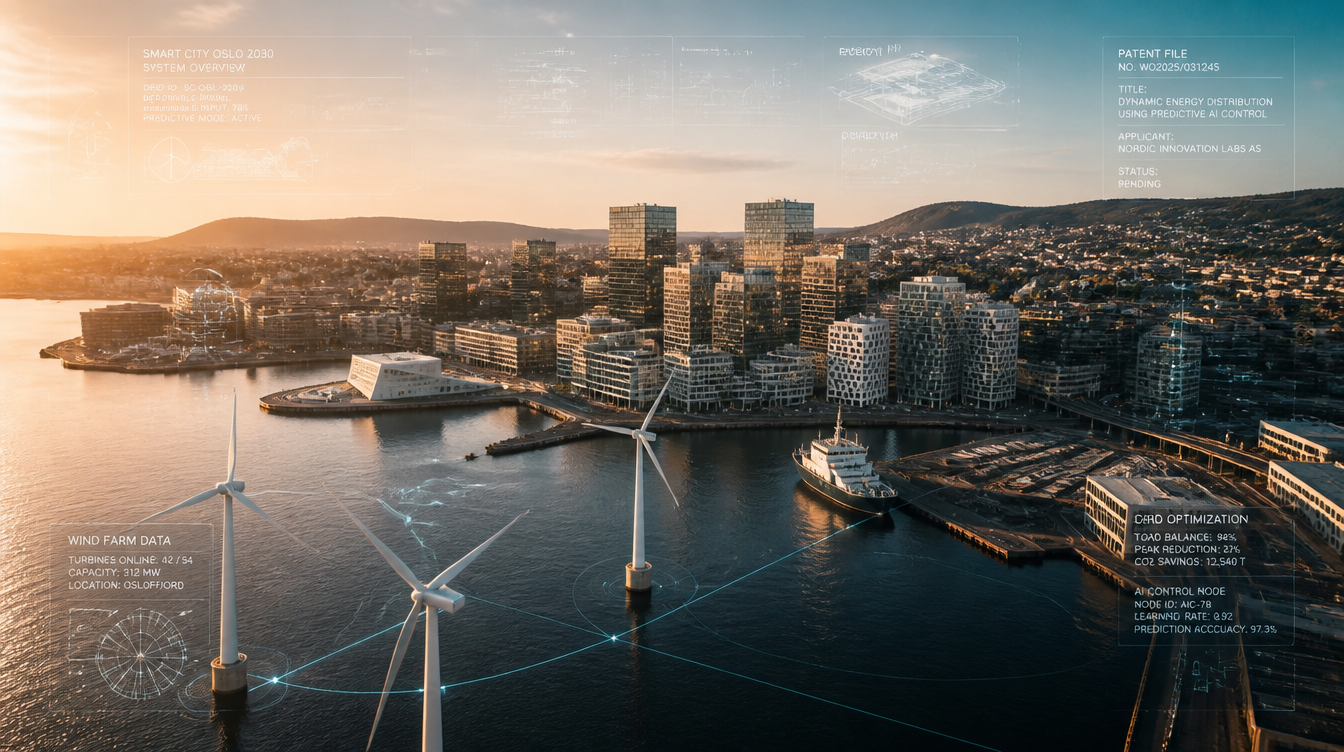
Denmark’s position as the historical pioneer of modern commercial wind energy means its companies hold patents covering technology accumulated over five decades of continuous innovation. Vestas — the world’s largest wind turbine manufacturer by installed capacity — holds one of the largest dedicated wind technology patent portfolios globally. Ørsted — originally a fossil fuel company that pivoted entirely to renewables — holds extensive patents across offshore wind installation, grid integration, and marine infrastructure.
The patent coverage in wind is not just broad — it’s deep in specific technology categories:
- Turbine blade design and materials. Including recyclable blade technology, blade aerodynamic optimisation, and composite material methods. Vestas holds significant filings in recyclable blade technology given increasing regulatory pressure on end-of-life turbine components.
- Offshore installation methods. Monopile installation, transition piece design, subsea cable laying methods, and floating offshore foundation systems — Denmark was the pioneer of offshore wind and its companies hold the foundational patents in offshore installation infrastructure.
- Turbine control systems. Grid integration, power electronics, pitch and yaw control, and wake steering — the software and electronics layer of turbine operation, which has become a significant filing category as turbines become increasingly software-intensive.
For any company developing wind turbine components, control systems, blades, or installation methods — whether as an OEM competitor or a supplier — a Denmark-specific FTO search covering Vestas, Ørsted, and the broader Danish wind patent ecosystem is foundational, not optional.
Green Hydrogen and Power-to-X: The Emerging Patent Category
Denmark’s national Power-to-X strategy — converting surplus renewable electricity into green hydrogen via electrolysis, then into derivative fuels for shipping, aviation, and heavy transport — has driven a wave of patent activity around hydrogen production, storage, and conversion. The Power-to-X patent landscape is less mature than wind — it’s a faster-moving and less consolidated space, which creates both more genuine FTO risk from recent filings and more whitespace for differentiated technology.
The key patent categories in this space:
- Electrolyser technology. Proton exchange membrane (PEM) and alkaline electrolysers for hydrogen production from renewable electricity. This is the core of the Power-to-X patent space, with active filing from European electrolyser manufacturers including Nel Hydrogen (Norway), ITM Power (UK with Danish partnerships), and a growing number of Danish energy companies integrating electrolysers into renewable energy projects.
- Hydrogen storage methods. Compressed hydrogen, liquid hydrogen, and chemical hydrogen carriers (ammonia, methanol). Storage is a critical technology bottleneck and a growing patent category.
- Power-to-X system integration. Methods for integrating wind generation, electrolysis, and hydrogen storage or conversion into a single energy system — the integrated systems patents that span multiple technology categories and require cross-classification searching to identify.
The Power-to-X space is one where
“First-mover filing advantage is still available in specific sub-categories. For companies developing novel electrolyser components, hydrogen storage materials, or Power-to-X integration methods, the Danish market is both an FTO challenge and a filing opportunity.”
Heat Pump Technology: A Growing FTO Consideration
Denmark and the broader Nordic region have among the highest heat pump adoption rates in Europe, driven by active government incentives to replace gas and oil heating as part of decarbonisation strategies. The patent landscape in heat pump technology covers several distinct categories:
- Refrigerant systems. Particularly around low-GWP (global warming potential) refrigerants as regulatory pressure drives transition away from HFCs. The refrigerant chemistry and system design patents are held across a broad range of European and Asian manufacturers.
- Heat exchanger design. High-efficiency plate heat exchangers and compact heat exchanger geometries for residential and commercial heat pump applications. Danish and Swedish companies including Alfa Laval hold significant positions in heat exchanger technology.
- Integrated energy systems. Patents combining heat pump functions with hydrogen storage, grid balancing, or building energy management systems. This is a fast-growing category as the decarbonisation transition pushes integration of heating, cooling, and energy storage systems. The most relevant patents for integrated heat pump-hydrogen systems cross both the Power-to-X and heat pump classification spaces.
Building an FTO Strategy Across All Three Categories
- Scope the FTO to cover the full Nordic region. A Denmark-only search misses Swedish and Norwegian patent holders who are active in wind, hydrogen, and heat pump technology. Alfa Laval (Sweden), Nel Hydrogen (Norway), and a range of Nordic clean energy companies hold patents that apply across the broader Nordic market. The FTO for a Nordic launch needs to cover Danish, Swedish, and Norwegian patent registers alongside EPO-granted European patents validated across the region.
- Prioritise your specific technology sub-category. Wind, hydrogen/Power-to-X, and heat pump technology each have different leading patent holders, different levels of landscape maturity, and different FTO risk profiles. A generic clean energy FTO search is too broad to be useful — scope precisely to the specific component, system, or method your product implements.
- Account specifically for Vestas and Ørsted as major patent holders. These two companies represent a different risk profile than smaller or newer entrants in the hydrogen and heat pump space. Their patent portfolios are deep, actively maintained, and backed by companies with the legal and financial resources to enforce them. For any product that operates in wind technology territory, the FTO analysis for Vestas and Ørsted specifically should be a separate, detailed workstream.
- For Power-to-X and integrated systems, search across patent classification boundaries. The most relevant patents for integrated clean energy systems often combine multiple technology categories — wind, hydrogen, and heat pump elements — in ways that make them invisible to single-classification searches. Cross-classification search methodology is essential for accurate FTO coverage in this space.
How Our FTO Service Covers Nordic Clean Energy Technology
Our freedom to operate service covers the Danish, Swedish, and Norwegian patent registers along with EPO-granted European patents validated across the Nordic region — structured specifically around wind, hydrogen/Power-to-X, and heat pump technology categories. For clean energy companies planning Nordic market launches, we provide a technology-specific FTO assessment that accounts for the different maturity levels and major patent holders across each category, including cross-classification search for integrated systems technology.
Launching a wind, hydrogen, or heat pump product into the Nordic market? Our FTO service covers the dense, technology-specific patent landscape that Denmark’s clean energy leadership has created. → Contact Us
Conclusion: The Takeaway
Denmark’s clean energy leadership isn’t just a policy story — it’s a patent landscape story. Wind, hydrogen, and heat pump technology each carry distinct, dense, and actively evolving patent pictures in the Nordic market. Companies that treat this as a generic clean energy FTO search, rather than understanding the specific technology categories and dominant patent holders at play, are underprepared for one of the most patent-rich clean energy markets in the world.
The right approach is precise, technology-specific, and Nordic-scoped — not a single broad search that treats Denmark, Sweden, and Norway as one jurisdiction, or that conflates the mature wind landscape with the still-developing Power-to-X space. Precision in the FTO scope is what makes the difference between a search that finds the real risk and one that creates a false sense of clearance.