

Introduction
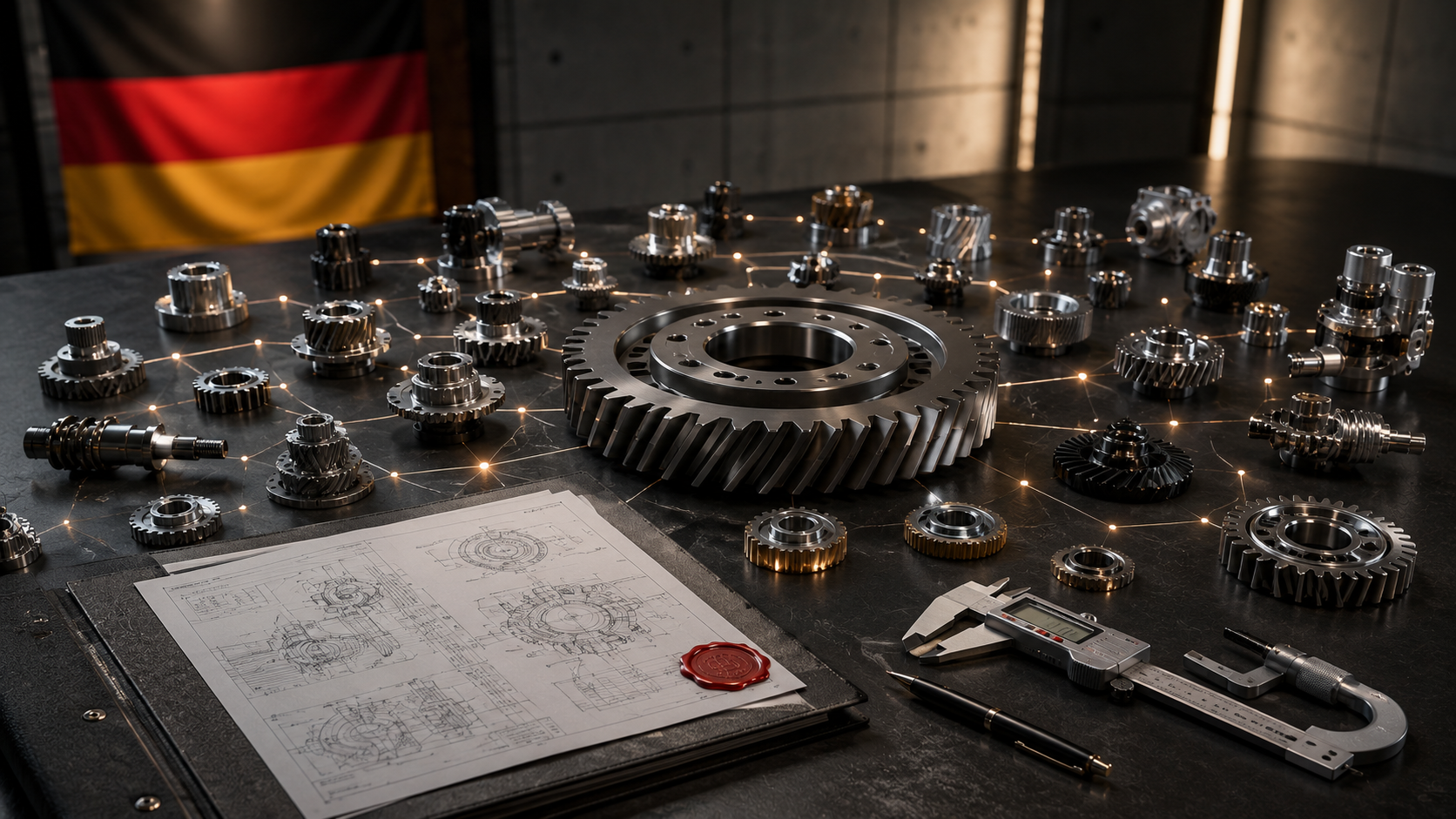
The mechanical engineering patent landscape does not behave like the pharma or electronics landscape. In pharma, a handful of global companies hold the vast majority of commercially significant IP. In semiconductors, a similar concentration applies. In mechanical engineering — particularly in Germany, where the sector accounts for a substantial portion of DPMA filing activity — the landscape is defined not by a few dominant holders but by the cumulative depth of thousands of Mittelstand companies, each holding narrow but often highly specific and commercially significant patent positions in their particular product niche.
This fragmentation changes how the landscape should be read. A standard top-holder analysis — identify the 10 largest patent holders, map their technology focus, assess concentration — captures only a fraction of the relevant blocking IP in mechanical engineering. The Mittelstand patent holder with 15 highly specific process patents in a narrow sub-technology area may represent a more significant practical FTO risk for a product entering that niche than a large corporation with 500 broadly filed patents across a dozen technology areas.
This article covers why the mechanical engineering landscape is structurally different, how the DPMA filing data reveals the competitive IP picture, what the Mittelstand portfolio structure looks like in practice, and how to navigate a fragmented landscape for R&D strategy decisions.
Why the Mechanical Engineering Landscape Is Structurally Different
Not dominated by a few large holders: In most technology-intensive industries, a Herfindahl-Hirschman analysis of patent ownership would reveal a high concentration ratio — a small number of companies holding a disproportionate share of commercially relevant IP. In German mechanical engineering, the concentration ratio is materially lower. The sector’s IP is distributed across a large number of medium-sized companies, each with deep specialisation in a specific mechanical, process, or systems engineering niche. The landscape is wide rather than tall — broad in the number of holders, deep in the specificity of each holder’s IP position within their niche.
The Mittelstand as the defining patent filing structure: Germany’s Mittelstand — the large body of medium-sized, often family-owned, highly specialised industrial companies that form the backbone of German manufacturing exports — is also the defining structure of the mechanical engineering patent landscape. These companies typically have between 200 and 2,000 employees, a single primary product category, and a patent portfolio that reflects decades of incremental innovation within that category. The portfolio depth within the niche is often greater than that of a large corporation filing broadly across many technology areas.
How fragmentation affects FTO and R&D strategy: For product companies entering German mechanical engineering market segments, the fragmented Mittelstand landscape creates specific FTO challenges. Blocking IP may be held by companies that are not obvious competitors — because they are niche specialists rather than broad-based competitors — and may not appear in a standard competitor-focused patent search. A German mechanical engineering FTO that searches only large, well-known companies produces a systematically incomplete scope.
How the DPMA Filing Picture Defines the Landscape
The DPMA’s annual filing data provides the clearest picture of where German mechanical engineering patent activity is concentrated and how it is evolving. Our analysis of the most prominent applicants at the DPMA in 2024 shows that filing volume remains concentrated in transport and mechanical engineering — the DPMA’s two largest technology field categories — with electrification and digitalisation as the fastest-growing sub-categories within both. For mechanical engineering specifically, the DPMA data reveals three distinct clusters of activity.
Cluster 1: Transport and Drivetrain Mechanical Engineering The largest single cluster in German mechanical engineering patent activity. Automotive drivetrain components, transmission systems, chassis engineering, braking systems, and powertrain integration patents dominate the volume. The largest filers in this cluster are Bosch, Continental, Schaeffler, and ZF Friedrichshafen — but beneath these large Tier 1 suppliers sits a dense layer of Mittelstand component specialists with deep process and design patents in specific drivetrain sub-systems.
Cluster 2: Industrial Machinery and Process Equipment The second-largest cluster covers industrial machinery, process equipment, packaging systems, printing technology, and production automation. This is the most Mittelstand-dominated cluster — the large filers (Siemens, Heidelberger Druckmaschinen, Krones) account for a smaller share of the total filing activity than in the transport cluster. The majority of commercially significant IP is held by specialists in specific machine types or process equipment categories.
Cluster 3: Measurement Instruments and Precision Mechanics A distinct cluster covering metrology, coordinate measurement, precision cutting, and mechanical sensing systems. Carl Zeiss, Mahr, and Hexagon hold significant positions, but the landscape is also shaped by a large number of precision engineering Mittelstand companies with deep IP in specific measurement applications. This cluster has the highest density of narrow, highly specific process patents per filing volume.
What the Mittelstand IP Picture Looks Like in Practice
Deep but narrow — the characteristic Mittelstand portfolio structure: A typical Mittelstand mechanical engineering patent portfolio has between 20 and 150 active patents, concentrated almost entirely within the company’s core product category. A packaging machinery specialist may hold 40 patents covering specific sealing mechanisms, film handling systems, and integration interfaces for their machine type. None of those patents is commercially significant outside the packaging machinery niche. All of them are potentially highly significant for a company developing or entering that niche.
Process patents as the primary Mittelstand IP mechanism: Mittelstand mechanical engineering companies tend to file more process patents than product patents — reflecting the fact that their competitive advantage often lies in how they manufacture or assemble something rather than in a novel product design. Process patents are more difficult to identify in a standard product-feature FTO search, because they describe manufacturing methods rather than product configurations. A German mechanical engineering FTO that does not explicitly cover process patents in the relevant manufacturing category risks missing the most commercially significant Mittelstand IP category.
Defensive filing culture: The Mittelstand tends to file patents defensively — to protect existing market positions rather than to build IP for licensing revenue. This means the portfolio structure is often highly aligned with the actual product the company sells, with little dead wood in the form of broadly filed speculative claims. For R&D teams, this defensive filing culture means the Mittelstand landscape is an accurate map of what these companies actually use and protect — making it a reliable input to whitespace analysis in ways that a landscape dominated by broadly filed speculative patents might not be.
“The Mittelstand patent portfolio tells you exactly where that company has built its market position, because it is filing to protect what it actually makes. A cluster of 30 narrow process patents around a specific machine configuration is not a broad IP claim on a technology area — it is a very specific fence around a very specific product. Understanding that fence is the starting point for R&D positioning around it.”
How to Navigate a Fragmented Landscape for R&D Strategy
The standard top-holder analysis is an insufficient starting point for mechanical engineering R&D strategy decisions. Our guide on how patent landscape analysis can enhance your R&D strategy covers how landscape outputs translate into concrete R&D investment and filing decisions — and for mechanical engineering specifically, three methodological adaptations are required to produce an accurate landscape from which R&D strategy can be developed.
- Sub-classification search rather than top-holder search. In a fragmented landscape, the most relevant blocking IP is not held by the largest companies — it is held by niche specialists whose portfolios are concentrated in the specific sub-technology area the R&D programme is targeting. A landscape analysis should be scoped to the relevant DPMA and EPO sub-classifications for the target technology, not built from the patent portfolios of the 10 largest mechanical engineering companies. This approach surfaces the Mittelstand specialists whose IP is directly relevant to the R&D programme.
- Explicit process patent coverage. Any mechanical engineering landscape analysis should include explicit search coverage for process patents in the relevant manufacturing and assembly categories. These patents do not appear in a product-feature search and require a separate process-oriented search methodology using manufacturing and process-specific classification codes alongside the product technology codes.
- Whitespace identification at the sub-classification level. In a fragmented landscape, whitespace tends to exist at sub-classification boundaries — in the spaces between the niche positions held by different Mittelstand specialists, or in the integration layer between established mechanical sub-systems where no single specialist has built a comprehensive IP position. Whitespace identification in mechanical engineering requires sub-classification-level granularity, not a high-level technology area mapping.
How Our Landscape Analysis Service Covers Mechanical Engineering
Our patent landscape analysis service covers the German mechanical engineering patent landscape with sub-classification-level search methodology, explicit process patent coverage, and Mittelstand-aware niche specialist identification alongside the large Tier 1 supplier landscape. For R&D teams assessing market entry into specific German mechanical engineering sub-categories, we provide a landscape analysis that reflects the actual competitive IP structure — including the niche Mittelstand positions that standard top-holder analysis consistently misses — with whitespace identification at the sub-classification level where R&D investment can build defensible IP positions.
Entering a German mechanical engineering market segment? The landscape is defined by fragmented Mittelstand IP, not a few dominant holders. Our analysis covers sub-classification-level niche positions and process patents — the two categories standard searches miss. → Contact Us
Conclusion: The Takeaway
The mechanical engineering patent landscape is not a concentration story — it is a fragmentation story. The IP that matters most for R&D strategy and market entry decisions is held not by a handful of large companies but by hundreds of Mittelstand specialists with deep, narrow portfolios precisely aligned with their product niches. Standard top-holder analysis captures the large Tier 1 suppliers but misses the niche layer where the most commercially significant blocking IP for any specific product category is likely to sit.
Navigating this landscape accurately requires sub-classification-level search methodology, explicit process patent coverage, and whitespace identification at the niche boundary level. The fragmented landscape is not an easier landscape to navigate — it is a different landscape, requiring a different analytical approach from the concentrated landscape that characterises pharma, electronics, or software patent analysis. Getting that approach right is the starting point for R&D investment decisions that reflect the actual mechanical engineering IP picture.