


Revolutionizing Patent Invalidity Searches: The Power of AI-Human Synergy with Invalidator LLM

Unlock Exclusive Content

Fill in your details below to receive a verification email and access the content.

Loading...
Enter the code sent to your email
Please confirm that your code is correct.

Overview

Patent invalidity searches play a critical role in determining the strength and enforceability of intellectual property.

However, traditional methods are time-intensive and demand considerable human effort, often limiting the scale and speed at which these analyses can be performed.

XLSCOUT identified a key bottleneck:

  • The inefficiency of manual patent invalidity searches.
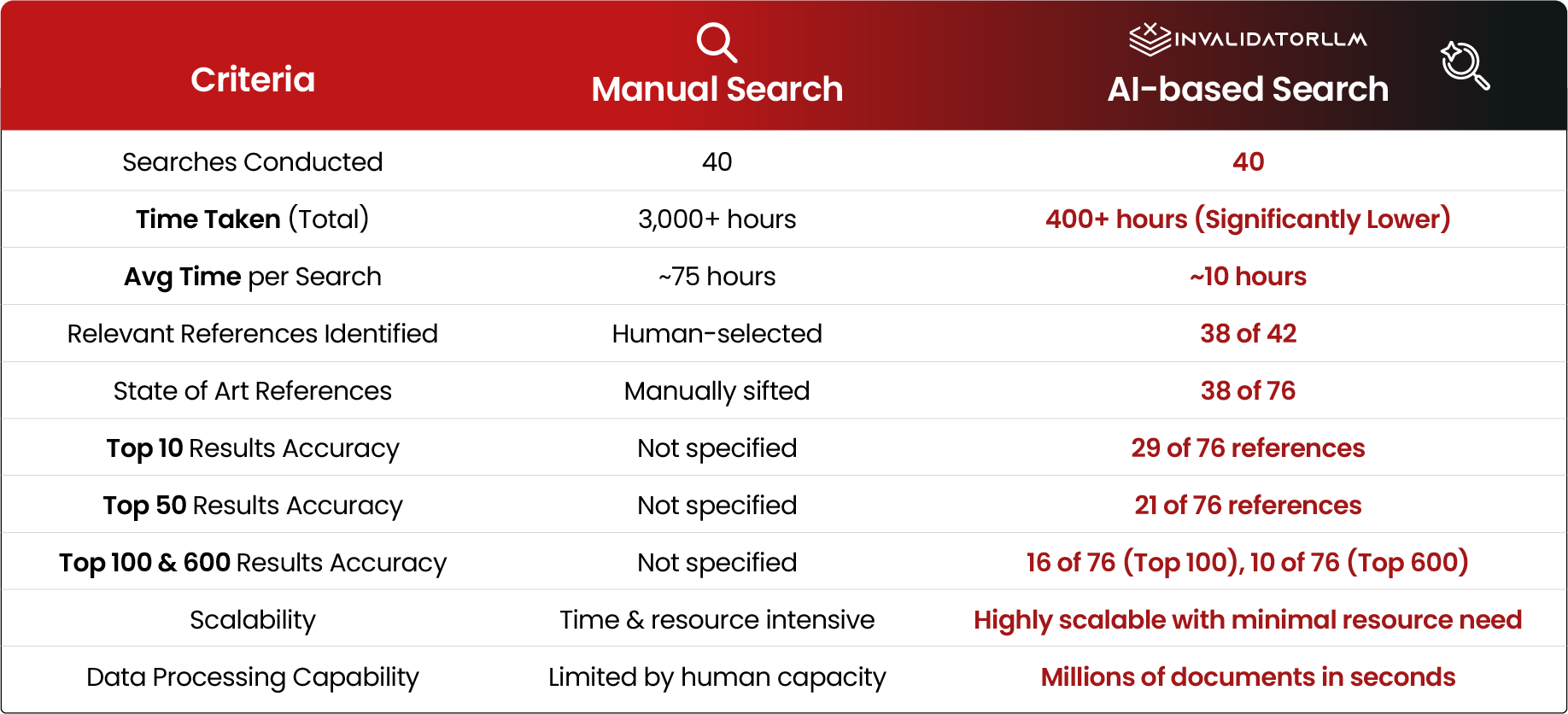
  • With over 3,000 hours invested in just 40 cases, there was a clear need for a more scalable, precise, and resource – efficient approach.


Challenge

The scale and complexity of modern patent datasets present a daunting challenge for traditional search methods:

Time Consumption

Each manual search consumed approximately 75 hours - delaying litigation and decision-making processes.

Data Overload

Sifting through millions of documents to find prior art relevant to specific patent claims can lead to inconsistencies and overlooked results.

Scalability Limitations

Manual searches restrict throughput, especially for organizations managing large patent portfolios or facing multiple invalidation proceedings.

The Comparison – AI & Human Searches​

  • 40 patent invalidity searches were undertaken – entailing a manual effort of over 3000+ hours
  • The same studies were run on Invalidator LLM module of Xlscout and the search results were compared for all searches​
  • Comparison criteria – time invested, the quality of search results, and the efficiency of both approaches​

Results Overview

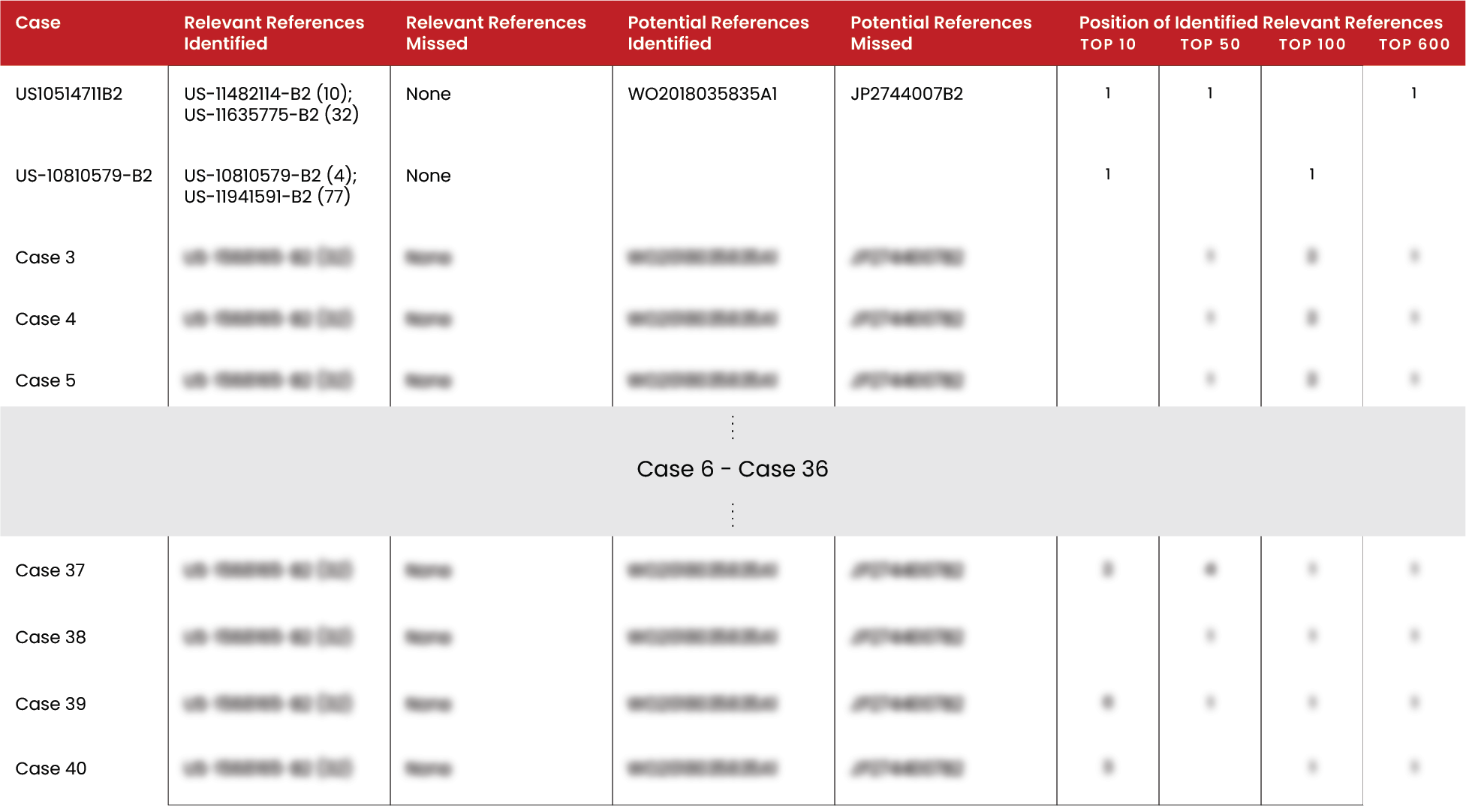
  • Relevant results – Invalidator LLM captured 38 out of 42 results identified by experienced patent search analysts.
  • State-of-art related results – Invalidator LLM captured 38 out of 76 results identified by experienced patent search analysts.
Key Findings​

Conclusion

By combining the computational power of AI with the nuanced insights of human experts, organizations can perform more thorough, efficient, and scalable patent reviews.

Insights

More Related Articles

protein sequence analysis biotechnology

Sequence-Based Freedom-to-Operate for a Clinical-Stage Antibody

The Patent That Looked Non-Essential – Until We Decoded the Math

EV Patent Infringement Analysis for 3,500+ Patents with TT Consultants

How a Global EV Giant Converted 3,500+ Patents into Validated Infringement Intelligence in 6 Weeks