
A vehicle platoon is a group of vehicles that travel in close proximity to one another, nose-to-tail, at highway speeds. A lead vehicle is followed by a number of other vehicles that closely match their speeds and maneuvers to the lead vehicle. Vehicle platoons have been proposed since at least the early 1960s. Since then, various universities and government-funded organizations have been studying them.
Before we had commercial wireless communications, GPS, and radar sensors, recommendations generally included some type of mechanical coupling between vehicles, much like a “road train” (although, unlike a road train, you will see barreling through the outback.)
For a complete IP and market analysis of Vehicle Platooning industry, download our free report.
Applications and Advantages
- Truck platooning has the potential to reduce CO2 emissions by around 10%.
- Platooning helps increase the capacity of the road, allowing smoother flow of traffic and lesser cause for accidents.
- With steady speeds and no constant need of changing speeds and braking, fuel will be saved.
- Fully Automated Vehicles on all roads can be a reality, since platooning will not require a skilled driver (barring the lead driver).
Market Insights
The truck platooning market is projected to grow from USD 37.6 million in 2021 to USD 2,728.7 million by 2030, at a CAGR of 60.96% during the forecast period.
Mergers and Acquisitions
- WABCO purchased Meritor (NYSE: MTOR) shares in the Meritor WABCO joint venture, thereby acquiring ownership of the business. This acquisition helps them expand their business in North America.
- NVIDIA invested USD 20 million in a Chinese start-up TuSimple. TuSimple uses NVIDIA’s, DRIVE PX2 platform, Jetson TX2, CUDA, TensorRT and cuDNN to nurture its autonomous driving solutions.
New Product Development
- Xevo introduced a new Journey Ware automotive product suite. This is the only data management software solution that uses machine learning and powerful data analysis tools to help automakers better understand their customers. Through unique data analysis, the software suite implements advanced safety measures to avoid hazards, limit distracted driving, and improve vehicle maintenance.
- Continental developed a modular, scalable, and interlinked MFC 500 camera platform. The modular kit consists of the intelligent MFC 500 camera, various satellite cameras, and a central computer for assisted or automated driving. The environment recognition and driving functions are optionally integrated in the camera platform though V2V and V2I communications.
Patent Landscape of Vehicle Platooning Landscape
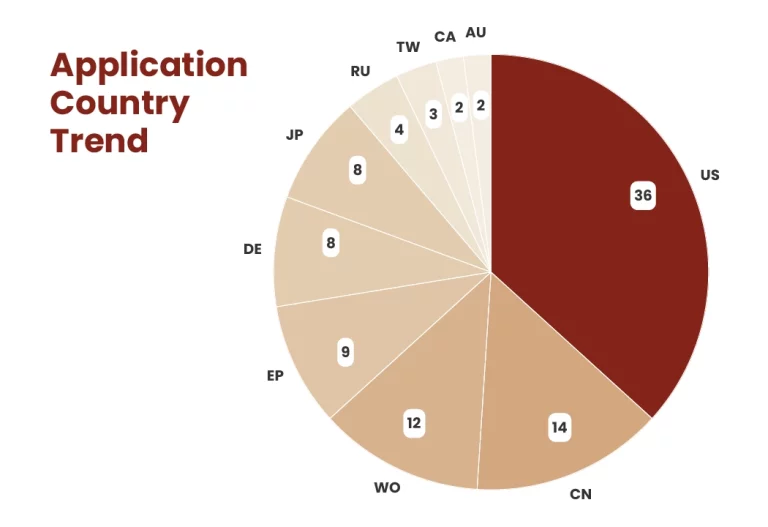
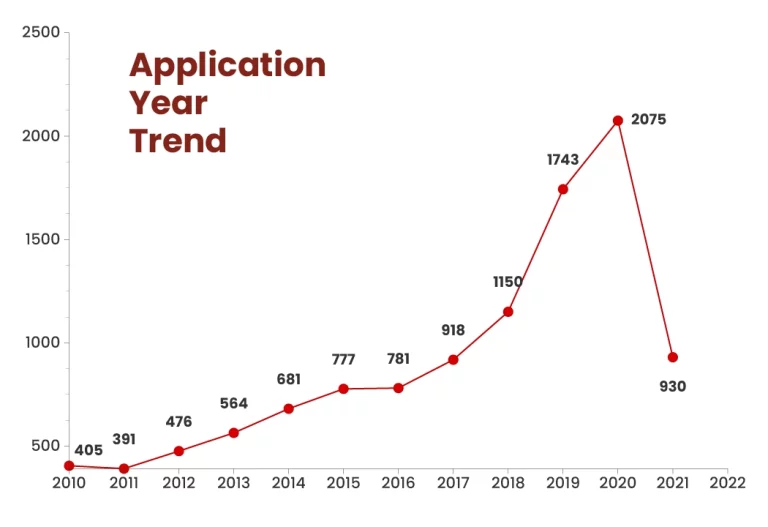
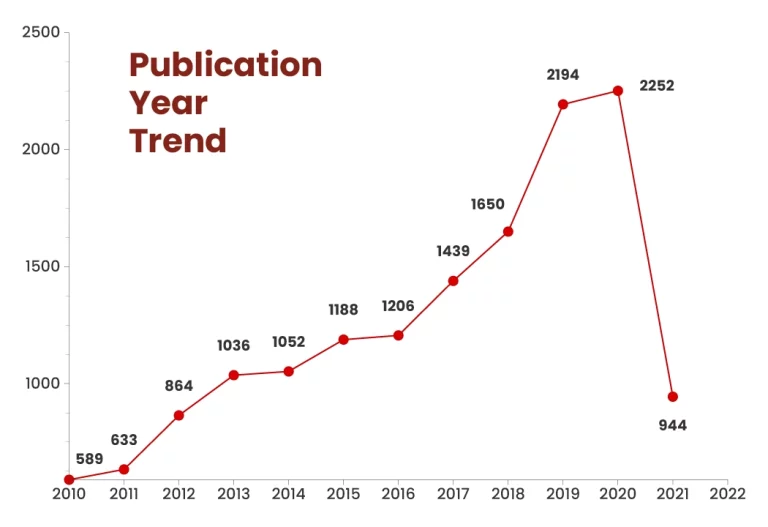
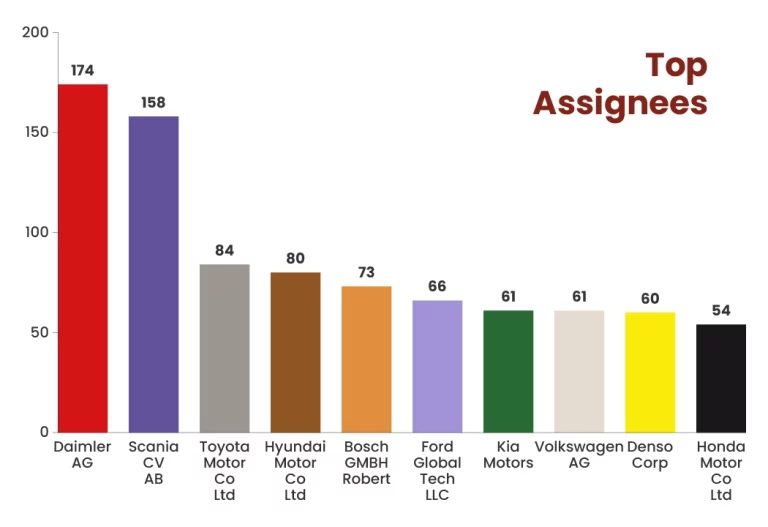
The vehicle platooning patent landscape depicts a dynamic environment with a considerable spike in innovative solutions. Geographic trends, publication years, and key assignees highlight global collaborative efforts that are propelling developments.
Leading Jurisdictions in Patent Applications
Growth in Patent Applications Over the Years
Growth Trend in Patent Publications
Biggest Shareholders in the Vehicle Platooning Innovation Industry
Conclusion
In conclusion, vehicle platooning has a bright future with possible benefits such as lower emissions, improved road capacity, and improvements toward autonomous driving.
Significant market growth predictions reflect the active contributions of key industry players such as WABCO, NVIDIA, Xevo, and Continental to this dynamic environment. The ever-changing patent environment demonstrates the industry’s dedication to innovation and determining the future of transportation.